KL-7 (also known as ADONIS)
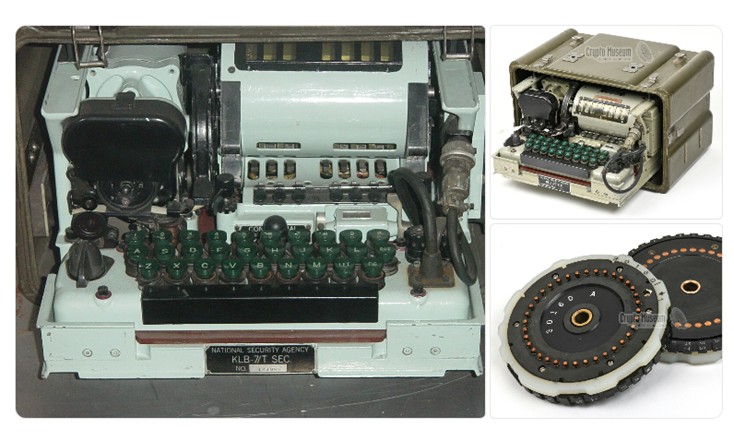
KL-7 (also known as ADONIS or Pollux) was a Cold War–era electromechanical cipher machine used by the U.S. National Security Agency (NSA) and NATO allies from the 1950s through the late 1970s.
Key points:
- Purpose: Secure high-level military and diplomatic communications.
- Type: Rotor-based encryption device, but more advanced than WWII-era machines like Enigma.
- Design:
- Used eight rotors, with seven active in the cipher path and one controlling stepping.
- Employed irregular rotor stepping, which made cryptanalysis significantly more difficult.
- Operation:
- The message was typed in; plaintext was encoded into ciphertext by the rotating internal wiring.
- The machine required operators to load a daily key list and rotor positions.
- Security:
- Considered very secure for its time.
- Remained in service until replaced by fully electronic systems such as the KL-51 in the late ’70s.