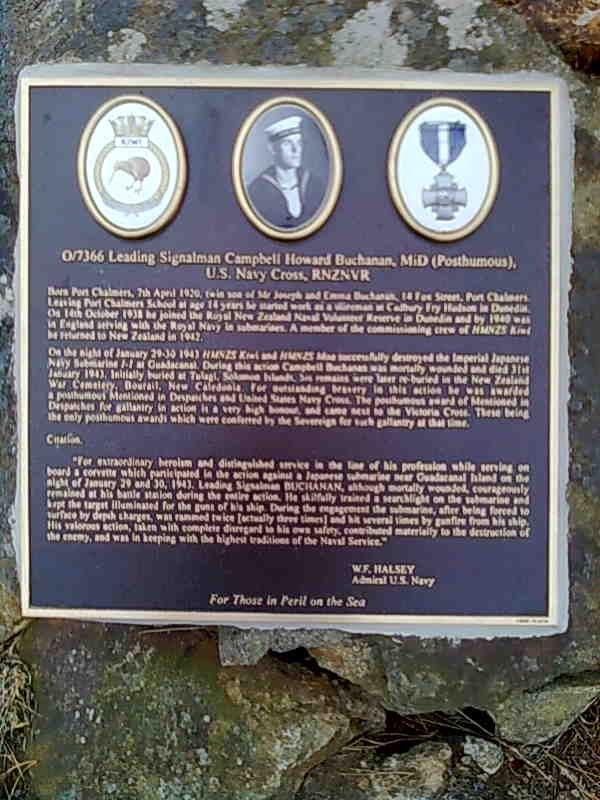
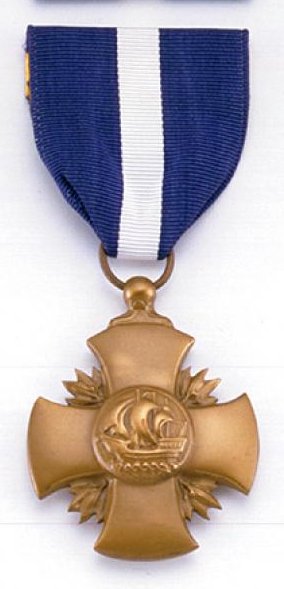
O/7366 Leading Signalman Campbell Howard Buchanan Navy Cross (US), MiD, RNZNVR
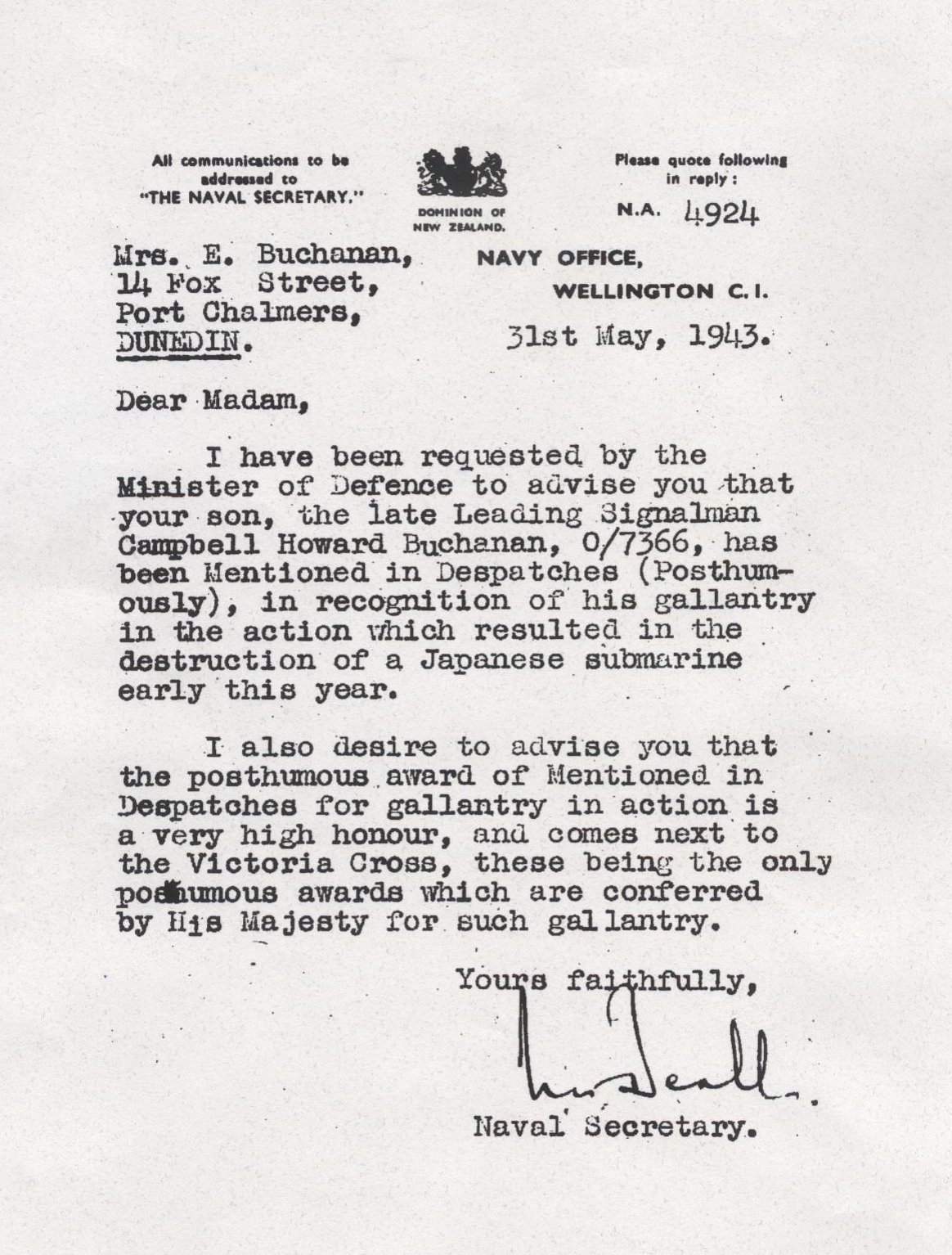
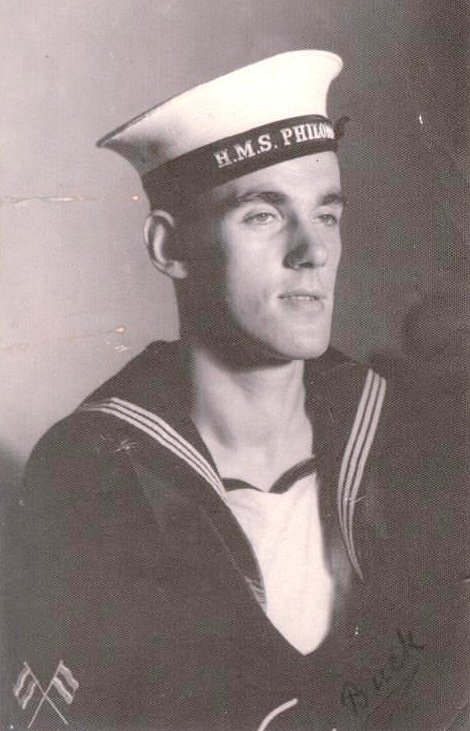 Campbell Buchanan was born at Port Chalmers, 7th April 1920, a twin son of Mr Joseph and Emma Buchanan, 14 Fox Street, Port Chalmers. Educated at Port Chalmers School, he left at age 14 years to work as a storeman at Cadbury Fry Hudson in Dunedin. He joined the Naval Volunteer Reserves, 14th October, 1938, in Dunedin and by 1940 was in England serving with the Royal Navy. He was to serve at least a year here before being drafted as a member of the commissioning crew of the recently built Bird Class, 600 ton minesweeping corvette, HMNZS Kiwi.
 In January 1943 HMNZS Kiwi (Lt. Cdr. Gordon Brisdon), accompanied by a sister ship, HMNZS Moa (Lt. Cdr. Peter Phipps, later to become the first New Zealand born Chief of Naval Staff), were deployed to patrol the sea lanes around the island of Guadalcanal where exceptionally fierce fighting was taking place between US and Japanese ground troops. This sea patrol was tasked with trying to prevent the Japanese re-supplying their forces with both soldiers and war material. On the night of January 29/30 Kiwi made sonar (asdic) contact with the2 000 ton Imperial Japanese Navy Submarine (IJN) I-1 (Lt. Cdr. E. Sakamato).
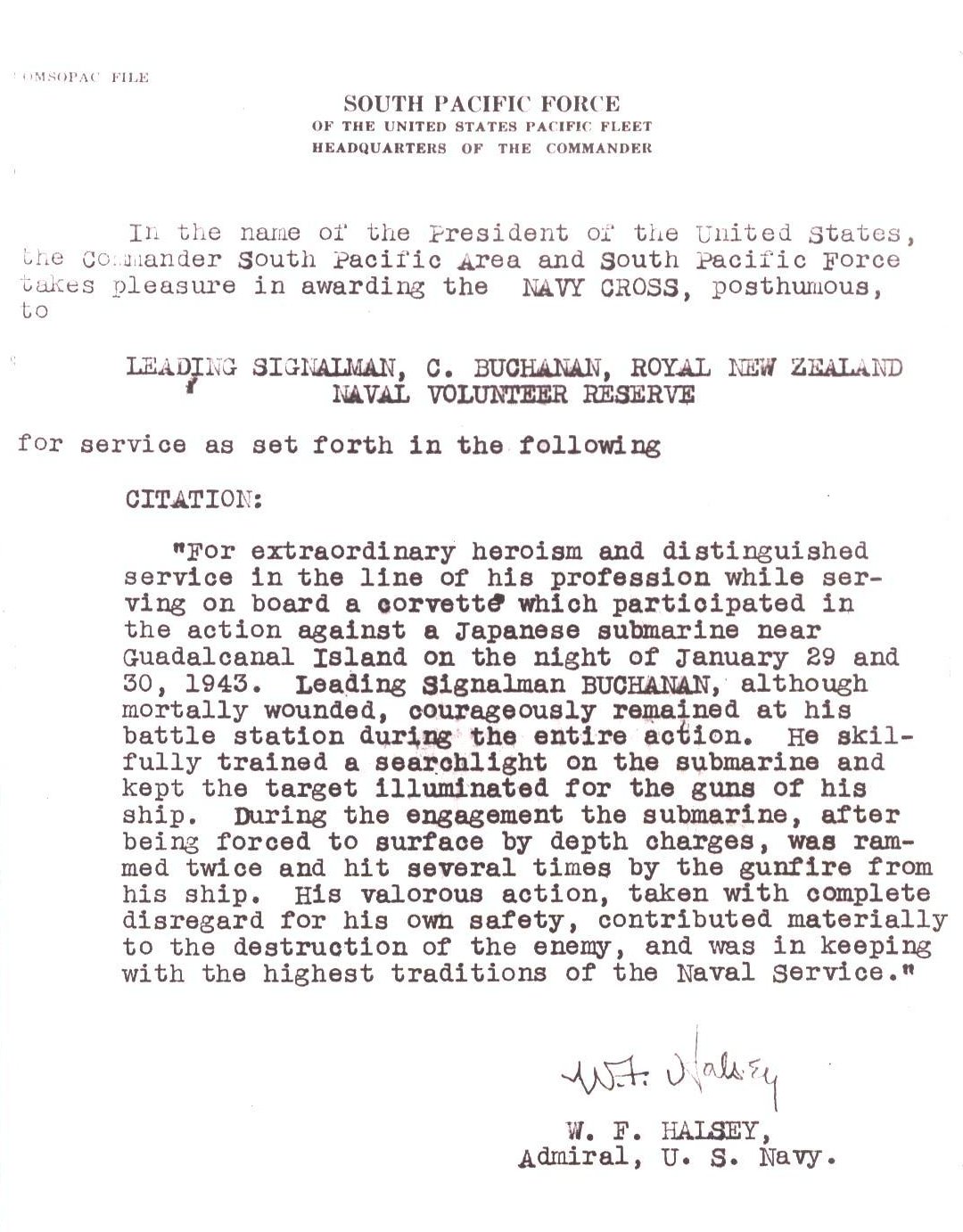 In the action that followed Kiwi forced the submarine to surface with depth charges. On the surface the submarine tried to use its deck gun as well as small arms fire to attack Kiwi which engaged the Japanese primarily with its 20 mm bow mounted Oerlikon gun. Moa also engaged the submarine by illuminating the target with ‘star shell’ and after Kiwi was forced to disengage, by using its 4 inch gun. Kiwi was to ram I-1 three times (not two as in the citation), causing considerable structural damage to the submarine but also to Kiwi’s bow which forced this ship to disengage from the action. Pursued by Moa, the I-1 now unable to submerge tried to escape by sailing close to the shore of Guadalcanal in an attempt to hide within the enhanced darkness created by the rugged coastline. This proved futile when the submarine grounded on a coral reef and became a total wreck.
 Campbell Buchanan’s action station was to man the searchlight and signalling lamp. The searchlight kept the submarine visible to those on Kiwi and Moa, but also had the effect of being a target point for Japanese gun and small-arms fire. Mortally wounded Campbell Buchanan stayed at his post until officially relieved from his place of duty.
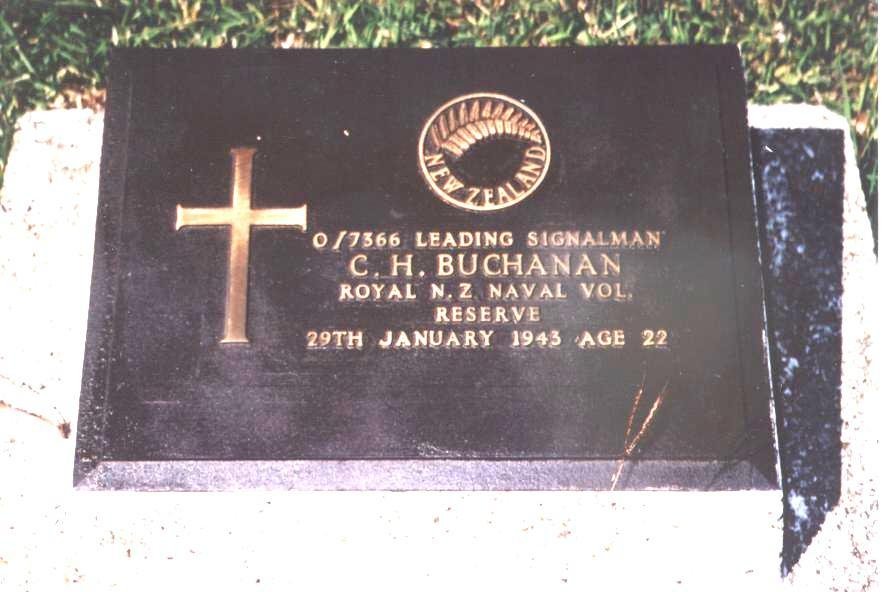 Taken ashore at nearby Tulagi, L/Sig. C.H. Buchanan died from his wounds on the 31st January 1943. Initially buried at Tulagi, Solomon Islands, his body was later removed to the N.Z. War Cemetery at Bourail, New Caledonia.
 In Dunedin and Port Chalmers the death of Campbell Buchanan was keenly felt by the community, especially his personal friends and acquaintances. On the wall in the main foyer of HMNZS Toroa, the RNZNVR Dunedin Headquarters, is to be found a photograph of Campbell Buchanan and a brief description of his exploits. In the past there had been cups in Campbell Buchanan’s name contested for by the Monowai Sea Scouts and Port Chalmers Swimming Club. In 2006 in Port Chalmers a small, previously unnamed but formed road between Island Terrace and Constitution Street, and relatively close to Fox Street was legalised as a street by the Dunedin City Council and named Campbell Buchanan Lane.
 A significant postscript to this action concerned Japanese naval codes. After the Battle of Midway (3-6 June 1942), senior IJN officers knew their military codes used in radio communications had been compromised. There had been too many seemingly fortuitous occurrences for the Americans that could not be dismissed by the Japanese as “lucky coincidences”, so they now ordered their reserve codes to become operational. A major task given to Lt. Cdr. Sakamato, captain of the I-1 was to deliver 20,000 copies of the reserve code books to Japanese forces operating in the South Pacific.
 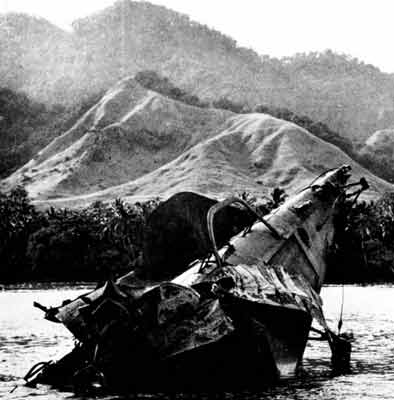 Many of these code books were still on the I-1 when it was destroyed. When US divers inspected the interior of I-1 after the action there was evidence of the Japanese crew’s attempt to destroy the remaining code books. However, enough material remained intact for US code breakers to solve the codes and allow them once again to decipher IJN encrypted radio messages. One of the first major allied successes from eavesdropping on Japanese military ommunications was the shooting down of the aircraft carrying the Commander-in Chief of the IJN, Adm. I. Yamamoto, the mastermind behind the attack on Pearl Harbour. The death of this very senior Japanese Naval officer had an immediate demoralising effect on the morale and direction of the Japanese Navy.
 In December 1968 sailors from HMNZS Otago retrieved the 5 inch gun off I-1 and brought it back to New Zealand.
Hello,
I’m looking for photographs of my Grandfather, Able Seaman Leonard Juno, who was on HMNZS Kiwi during WWII. I know he was posted to Kiwi just after it was ready to sail again after the Jap Submarine episode off of Guadalcanal. What date is the photograph of the ship’s company on this page? Any other info. would be much appreciated!
Thank you
Ben Shuker
Hi Ben. I am a medal collector and military researcher in Tauranga. I have recently purchased a set of medals and paperwork to Ronald Frederick Juno who I believe was your Grandfathers brother.? would you please contact me. Regards Sean.
Hi Sean,
Gosh I hope you get this message. It seems I was not updated when you replied – my apologies.
Yes Ron was certainly my Grandfather’s brother and served in the Navy. If you receive this message, would you mind emailing me?
benshukerpt@hotmail.com
Thank you again
Regards
Ben
Hi,
Would you have any photos of my Grandfather also? Kenneth Douglas Inglis who was also on the HMNZS Kiwi. I think he was posted on the Kiwi the whole time.
Thanks
Stephen Inglis
Hi Stephen
I have some random photos of my Grandfather with some of the ships’ company posing inside the ship. I’m not sure if it’s in Kiwi, but I’ll see if I can find out.
Talk soon
Ben
Hi Ben,
That would be awesome! thank you very much
Steve
Hey Steve
I’ve had a look through the limited photos I have and unfortunately they’re from a ship called Muritai. I have none from Kiwi sorry!
Some photos have names written on them, so if I come across any with your Grandfather’s name on it I’ll get back to you.
Steve,I would appreciate any photos of Muritai you could send. My father, Percy Smith was a bunting and he served on Muritai during WW2 before being deployed to UK.
Ken Smudge Smith
The acticle written about Campbell has one minor error in it. Campbell was born on 7th April 1920. I know this as I am 1 of the sons of his twin sister Christina Margaret Joyce Neill, who is still living in Taupo.
Ian, Could I please get in contact with you regarding the rededication of a memorial to this brave man? We are trying to contact members of his family to be present for it.
Hi Kramer, please contact me on my email ianandshirl@hotmail.com
Hi 🙂 I’m wondering if I can get a copy of the photograph you have of the crew up there ^ ? My grandfather too was on board the Kiwi when they were in the Solomons. I think I can pick him out but am not 100% sure as when I zoom the pic it gets too pixilated < is that even a word? I would very much appreciate any assistance you can give me by way of getting a copy of this photo. Thank you.
Nicky,
I am unable to help with a better quality picture but if you email the Navy Museum for the Historial Photographic Section Mr Paul Restall maybe able to assist. Regards
Frank
My cousin ! Through the Buchanans in Greenock Scotland.
Robert Bradshaw